
Tixel-Face Value Ticket Resale
TixelEvents
0.00.00 Reviews
- Version
- 1.0.4
- Installs
- 10.00K
- Age Rating
- Everyone
Screenshots
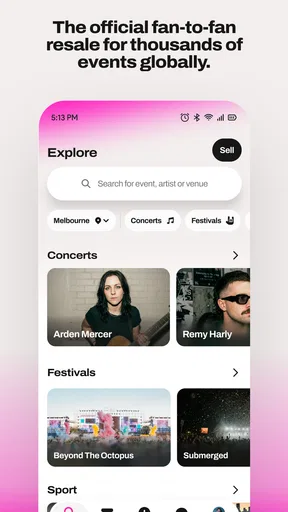
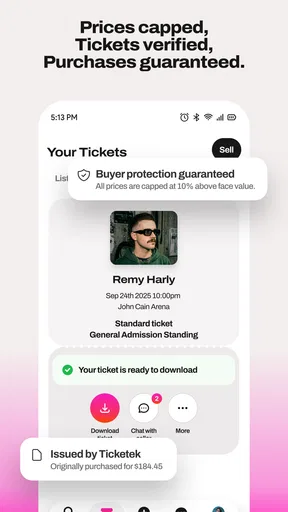
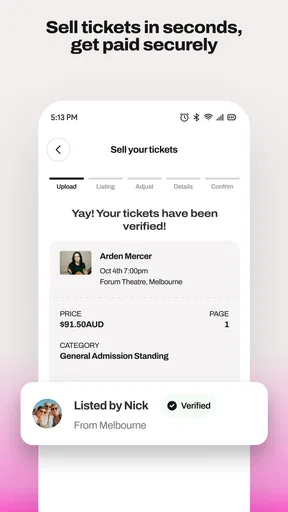
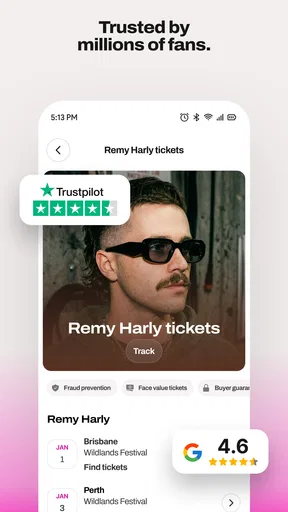
Our Review of Tixel-Face Value Ticket Resale
 Analysis by Appyee
Buying a ticket from someone else can be exciting right up until the moment the price jumps, the listing feels unclear, or you start wondering whether the ticket is even worth the risk. Tixel-Face Value Ticket Resale takes a focused approach to that problem: it is an events app built around buying and selling tickets at capped prices. After spending time with it, I found the appeal easy to understand. It is less about endless browsing and more about making resale feel controlled and approachable.
Tixel is free to use, comes from developer Tixel, and is suitable for everyone. It is a relatively new app, released on June 24, 2026, with version 1.0.2 available for devices running Android 8.0 or later. The app has already passed the ten-thousand-install mark, which suggests that people are beginning to look for an alternative to the more aggressive side of ticket resale.
My first impression was that its value depends heavily on timing. If an event you want is sold out, or if your plans change and you need to sell a ticket, the capped-price idea becomes immediately relevant. If you are only casually browsing events with no particular destination in mind, the app may feel less essential. That distinction matters because this is not an all-purpose entertainment platform. Its usefulness comes from solving a specific ticket problem well.
Why the first week feels useful
During the first few days, the strongest part of the experience is the clarity of the central promise. Buyers are not approaching resale as a bidding contest, and sellers are not encouraged to treat a popular event as an excuse for unlimited markups. That changes the mindset before you even decide whether to purchase. I found myself evaluating the event, the timing, and the ticket details rather than trying to guess how high the price might climb.
A practical first-week scenario would be a concert that sold out before you managed to buy a ticket. Instead of repeatedly checking social media posts or searching through informal listings, you can use an app designed specifically for resale at capped prices. The benefit is not that it guarantees a ticket will appear when you need one. The benefit is that, when a listing is available, the price structure is intended to keep the resale process closer to the ticket’s face value.
That makes Tixel particularly interesting for people who dislike the emotional pressure of secondary marketplaces. On many resale services, the most visible number can be far above what the original buyer paid. Here, the capped-price concept gives you a clearer boundary. I still recommend checking the event details carefully before committing, but the starting point feels more reasonable and less speculative.
For sellers, the first-week appeal is equally straightforward. A change of plans does not have to mean abandoning a ticket or relying on a vague message in a local group. Listing it through a dedicated ticket-resale app gives the sale a clearer purpose. The trade-off is that a capped price may limit the amount a seller can recover compared with an unrestricted marketplace. In my view, that is not a flaw hidden in the background; it is the central exchange. You give up the possibility of a large markup in return for a resale environment that feels fairer.
One useful habit is to decide your maximum acceptable total cost before you browse. A capped resale price can make a listing look sensible, but the complete outing may still involve transport, food, or accommodation. Setting that personal limit first helps prevent the app from turning a fair resale price into an impulsive purchase. This is a small workflow change, but it makes the service more useful than simply opening it whenever you feel disappointed about a sold-out event.
The app also makes sense for last-minute planning, although that use requires patience. Availability can change as other people’s plans change, so it is worth checking when your schedule is flexible rather than waiting until the final possible moment. If you need a guaranteed ticket immediately, a primary ticket seller may still be the better option when tickets remain available there. Tixel is most persuasive when the original route is unavailable or when you want a more disciplined alternative to inflated resale listings.
What makes it different from familiar alternatives
The usual alternatives fall into two groups: buying directly from the event’s original seller or searching broad secondary marketplaces. The primary seller is normally the simplest choice when tickets are still available, because you avoid resale uncertainty altogether. Tixel cannot replace that route. Its role begins when the event is sold out, when another attendee needs to sell, or when you specifically want a capped-price resale option.
Broad resale marketplaces may offer more variety, but they can also make price comparison tiring. Their strength is reach and choice; their weakness is that the buyer may spend more time judging whether a price is reasonable. Tixel’s narrower identity is a strength for users who want the price principle to be part of the product rather than something they must negotiate themselves.
Informal exchanges through social networks or community groups can sometimes be convenient, especially when you know the person selling. They are also more dependent on trust, careful communication, and the quality of the information in each post. A dedicated app feels more organized, but organization should not be confused with a reason to skip basic checks. I would still confirm the event, date, ticket type, and any conditions shown before treating a listing as ready to buy.
Does it keep earning a place after the novelty?
The first-week excitement of a focused resale app is easy to understand, but long-term value is a harder test. Tixel is not an app I would expect to open every day without a specific reason. Its recurring value comes from being ready when a ticket problem appears. That makes it more like a useful tool kept on the phone than a daily destination.
For regular event-goers, that can still be meaningful. People who attend concerts, festivals, theatre performances, or sporting events often face the same cycle: tickets disappear quickly, plans change, and resale prices become difficult to justify. A capped-price service can become part of the routine for checking availability without immediately accepting inflated prices. The app earns lasting space when it becomes the first resale option you consider, not because it demands constant attention.
There is also a practical reason to keep it installed if you sometimes buy tickets in advance. Plans are not always stable. A work commitment, a family obligation, or a travel change can make a ticket unusable. Having a dedicated resale route may reduce the temptation to sell through an improvised channel. For me, that is a more durable benefit than the novelty of seeing a new ticket marketplace on the phone.
On the other hand, occasional event-goers may not gain much from maintaining another app. If you attend one event every few years, you may prefer to use the original ticket seller or a familiar marketplace only when the need arises. The free price removes one barrier, but installation alone does not create a reason to return. The service has to match your habits.
A second useful workflow is to separate “watching for a ticket” from “being ready to buy.” When you find an event you care about, decide in advance which ticket category and price feel acceptable. Then, if a suitable listing appears, you can act without starting the entire decision process from zero. This is especially helpful when availability is temporary. It also prevents repeated browsing from becoming a form of indecision.
For sellers, recurring value depends on whether the app becomes a trusted exit route. If you often buy tickets months ahead, a capped resale system can make early purchasing feel slightly less risky because there is a defined place to try selling if plans change. It does not remove the possibility that a ticket may remain unsold, so I would never buy an event ticket purely because I assume resale will be easy. The app can improve flexibility, but it cannot turn every ticket into a guaranteed asset.
The maintenance burden is low, but attention still matters
One advantage of a focused app is that it should not require much daily maintenance. You do not need to build a large social profile or create a complicated collection of content just to use it for a ticket. The main upkeep is practical: keep the app available, check listings when an event matters, and review your own plans before buying or listing anything.
Version 1.0.2 shows that the product is still at an early stage, so I would approach it with the expectations I use for a young service. The central idea is clear, but long-term polish often depends on how well an app handles unusual cases, busy event periods, and changes in user routines. That is not a criticism of the concept; it is a reason to judge the app by repeated use rather than by the first attractive interaction.
Buyers should maintain a simple personal checklist. Confirm that the event is the correct one, check the date and venue information, make sure the ticket type suits your plans, and look at the final purchase details before proceeding. Sellers should prepare the information a buyer would need and avoid listing a ticket casually if they are not actually ready to complete the transfer. These steps may sound obvious, but they are exactly the kind of small actions that keep a resale app from becoming frustrating.
Another non-obvious trade-off is that a capped price changes the seller’s motivation. Someone who wants to maximize profit may choose a different marketplace. Someone who mainly wants a fair chance of recovering the ticket’s value may prefer Tixel. The app therefore works best when both sides understand the purpose. Buyers get protection from the most extreme pricing behavior, while sellers accept that fairness matters more than chasing the highest possible return.
The age rating of Everyone makes the app broadly accessible, but that does not mean every event is suitable for every person. The app’s general accessibility and the event’s own age requirements are separate questions. I would always check the event rules before purchasing, particularly when buying for a younger attendee or for a group with different needs.
Where fatigue can appear over time
The biggest source of fatigue is availability. A capped price is attractive only if the ticket you need appears at a useful time and in a suitable category. If you repeatedly open the app and find nothing that fits, the experience can become another form of checking that produces no result. That is why I would use it with a clear event in mind rather than browsing endlessly.
A second source of friction is the gap between price fairness and purchase certainty. The app’s capped-price approach can make a listing feel more acceptable, but it does not automatically answer every question about seating, timing, transfer, or your own schedule. A lower or controlled resale price is not a substitute for reading the listing carefully. Users who want a completely effortless purchase may find the necessary judgment tiring.
Sellers may feel a different kind of fatigue. Listing a ticket still requires accuracy, patience, and a willingness to accept the capped-price structure. If the event is not in demand, or if the timing is inconvenient, the ticket may not move quickly. Anyone expecting the app to function like an instant cash-out service could be disappointed. I see it as a more responsible resale channel, not a promise that every listing will find a buyer.
There is also a habit risk for frequent buyers. Because the pricing feels more controlled, it may be tempting to say yes to more events than your calendar can realistically handle. I found the best safeguard to be a short pause before purchasing: check the date, travel plan, and the people you are attending with. That pause keeps the app’s fairness from encouraging unnecessary spending.
Compared with a broad marketplace, Tixel may feel less flexible if your priority is maximum selection, unusual ticket arrangements, or the possibility of negotiating directly. Compared with buying from the original seller, it adds the normal layer of resale consideration. Its advantage is strongest when your priority is a more restrained price environment. If that is not your priority, another option may genuinely suit you better.
My long-term verdict on Tixel
After the initial novelty fades, Tixel-Face Value Ticket Resale remains useful because its purpose is easy to remember. It gives buyers a place to look when primary tickets are gone and gives sellers a more structured way to pass on tickets they can no longer use. The capped-price approach is not a universal answer, but it is a meaningful choice for people who dislike inflated resale markets.
I would recommend it to regular concert and event attendees, careful buyers who want a clearer price boundary, and sellers who value a fair resale process more than the chance of a large markup. It is also worth considering for anyone who has previously relied on scattered social posts and would prefer a dedicated environment for ticket transactions.
I would skip it if you rarely attend events, need a guaranteed ticket immediately, or care primarily about the widest possible marketplace and the highest potential seller return. In those situations, the original ticket provider or a larger resale service may be more practical. Tixel earns its place through its specific philosophy, so users who do not share that philosophy may not feel much benefit.
My final judgment is positive but measured. The app is free, focused, and simple to understand, and its early install base shows that the idea is attracting attention. Its lasting value will depend less on novelty than on whether it consistently helps people handle two recurring moments: finding a ticket without accepting an unreasonable resale price, and selling one without turning the process into an improvised negotiation. That recurring usefulness is the real reason to keep it installed.
For me, the best way to use it is as a prepared option rather than a constant habit. Keep your expectations realistic, decide your limits before browsing, and treat every listing as a purchase that still deserves attention. Used that way, the app offers a calmer alternative to the most frustrating parts of ticket resale. It does not eliminate every uncertainty, but it gives fairness a central place in the decision, and that is enough to make it worthwhile for the right kind of event-goer.
Verdict
Strengths of Tixel-Face Value Ticket Resale
- Helps fans find tickets at fairer prices without hidden resale markups.
- Mobile-first interface makes browsing and purchasing quick and convenient.
- Ticket listings include clear event, seat, and pricing information.
- Useful option for selling unwanted tickets to other genuine fans.
- Supports safer transfers than arranging sales through informal social channels.
Limitations of Tixel-Face Value Ticket Resale
- Availability depends heavily on the event and local Tixel marketplace.
- Popular tickets can sell quickly, requiring frequent checks for new listings.
- Service fees may increase the final price beyond the displayed ticket value.
- Refund and cancellation rules can vary by event and ticket seller.
- Some users may face delays when transferring tickets close to event time.
Similar Picks in This Category
View All
Easy Quran Mp3 Audio Offline
Muslim Worldapp4.7

Invitation Maker: Cards & RSVP
Greetings Island4.9

StubHub - Live Event Tickets
StubHub4.3

Fever: Events & Tickets
Fever Labs4.7

Epic Freebie Games Radar
Arioch Pds - Apps & Games4.4

Invitation card Maker, Design
Splendid App Maker4.9
Frequently Asked Questions
What is Tixel-Face Value Ticket Resale?
Tixel is a ticket-resale marketplace designed to help people buy and sell tickets for concerts, festivals, sports events, theatre shows, and other live experiences. Its main selling point is face-value resale, meaning tickets are generally offered at the original price rather than being marked up for profit. The platform also provides event and ticket details so buyers can review what they are purchasing before completing a transaction.
Is it safe to buy tickets through Tixel?
Tixel includes measures intended to make ticket resale safer than arranging a private transaction through social media or classified listings. Listings are connected to specific events, and the platform may use ticket checks, seller verification, and transfer procedures depending on the event and region. However, users should still confirm the event date, venue, ticket type, delivery method, and any restrictions before paying, since policies can vary between events.
Does Tixel sell tickets above face value?
Tixel is focused on face-value resale, so sellers are generally expected to list tickets at the original price or within the limits established by the applicable event and local regulations. Additional booking or service fees may still be added to the buyer’s total, meaning the final amount can be higher than the ticket’s printed face value. Always review the complete checkout breakdown before confirming your purchase.
Can I resell a ticket I can no longer use on Tixel?
In many cases, you can list an eligible ticket for resale directly through Tixel by selecting the relevant event and entering the requested ticket information. The ticket must usually be valid, transferable, and not already used or listed elsewhere. Availability depends on the event organizer, ticket provider, location, and ticket type. Before listing, check whether mobile tickets, VIP packages, memberships, or personalized tickets have special restrictions.
Are refunds available if an event is canceled or I change my mind?
Refund and cancellation rules depend on the event, ticket issuer, organizer, and Tixel’s applicable policies. A buyer may have different rights when an event is canceled, postponed, or significantly changed compared with simply deciding not to attend. Resale purchases are not automatically refundable because of a change of plans. Before completing an order, carefully read the event’s terms, delivery conditions, and any protection or refund information shown during checkout.
